Design World

  • Home
  • Technologies
    • ELECTRONICS • ELECTRICAL
    • Fastening • joining
    • FLUID POWER
    • LINEAR MOTION
    • MOTION CONTROL
    • SENSORS
    • TEST & MEASUREMENT
    • Factory automation
    • Warehouse automation
    • DIGITAL TRANSFORMATION
  • Learn
    • Tech Toolboxes
    • Learning center
    • eBooks • Tech Tips
    • Podcasts
    • Videos
    • Webinars • general engineering
    • Webinars • Automated warehousing
    • Voices
  • LEAP Awards
  • 2025 Leadership
    • 2024 Winners
    • 2023 Winners
    • 2022 Winners
    • 2021 Winners
  • Design Guides
  • Resources
    • 3D Cad Models
      • PARTsolutions
      • TraceParts
    • Digital Issues
      • Design World
      • EE World
    • Educational Assets
    • Engineering diversity
    • Reports
    • Trends
  • Supplier Listings
  • Advertise
  • SUBSCRIBE
    • MAGAZINE
    • NEWSLETTER

Exploring Underground With A Colliding Drone

By Phys.org | May 23, 2017

ESA astronaut Luca Parmitano last weekend helped to explore the caverns under Sicily using a drone that deliberately bumped into its surroundings in order to build a map.

ESA has been testing equipment, techniques and working methods for missions with astronauts in inner space for many years. Delving inside Earth and exploring caves often parallels the exploration of outer space, from a lack of sunlight to working in cramped spaces and relying on equipment for safety.

An extension of ESA’s Cooperative Adventure for Valuing and Exercising human behaviour and performance Skills course, this CAVES-X1 expedition saw Luca join a scientific expedition organised by La Venta Association and the Commissione Grotte Eugenio Boegan in the La Cucchiara caves near Sciacca, Sicily.

Whereas such activities are arranged specifically for training astronauts, course designer Loredana Bessone says, “We now want astronauts to take part in existing scientific caving and geological expeditions – scientific exploration does not get more real than this.”

The team arrived on 19 May and spent two days exploring the area, which includes a 100 m-deep abyss. As this cave reaches 37°C, the explorers also tried out cooling vests – another similarity to astronauts in spacesuits.

Tough drone

Luca took geological samples and tried a new way of probing hard-to-reach spaces: a Flyability drone deliberately bumped into walls to learn how to navigate and to map tight areas that are too dangerous for humans.

ESA’s course coordinator, Francesco Sauro, an experienced caver and field geologist, remarks: “The drone used its thermal camera to map how the cave continued all the way to an unexplored area featuring water, impossible to reach for humans.

“These tests will help us understand which technologies can be used in future exploration of lava tubes on Mars, for example.”

ESA’s strategy sees humans and robots working together to explore and build settlements on planetary bodies, as well as improving our understanding of our origins, and the origins of life in our Solar System.

The short expedition ends today with a conference on the use of novel technologies in underground exploration and scientific research of extreme environments at the University of Palermo in Sicily.

A talk by Luca at ESA’s astronaut centre on preparing astronauts for space exploration can be viewed below:
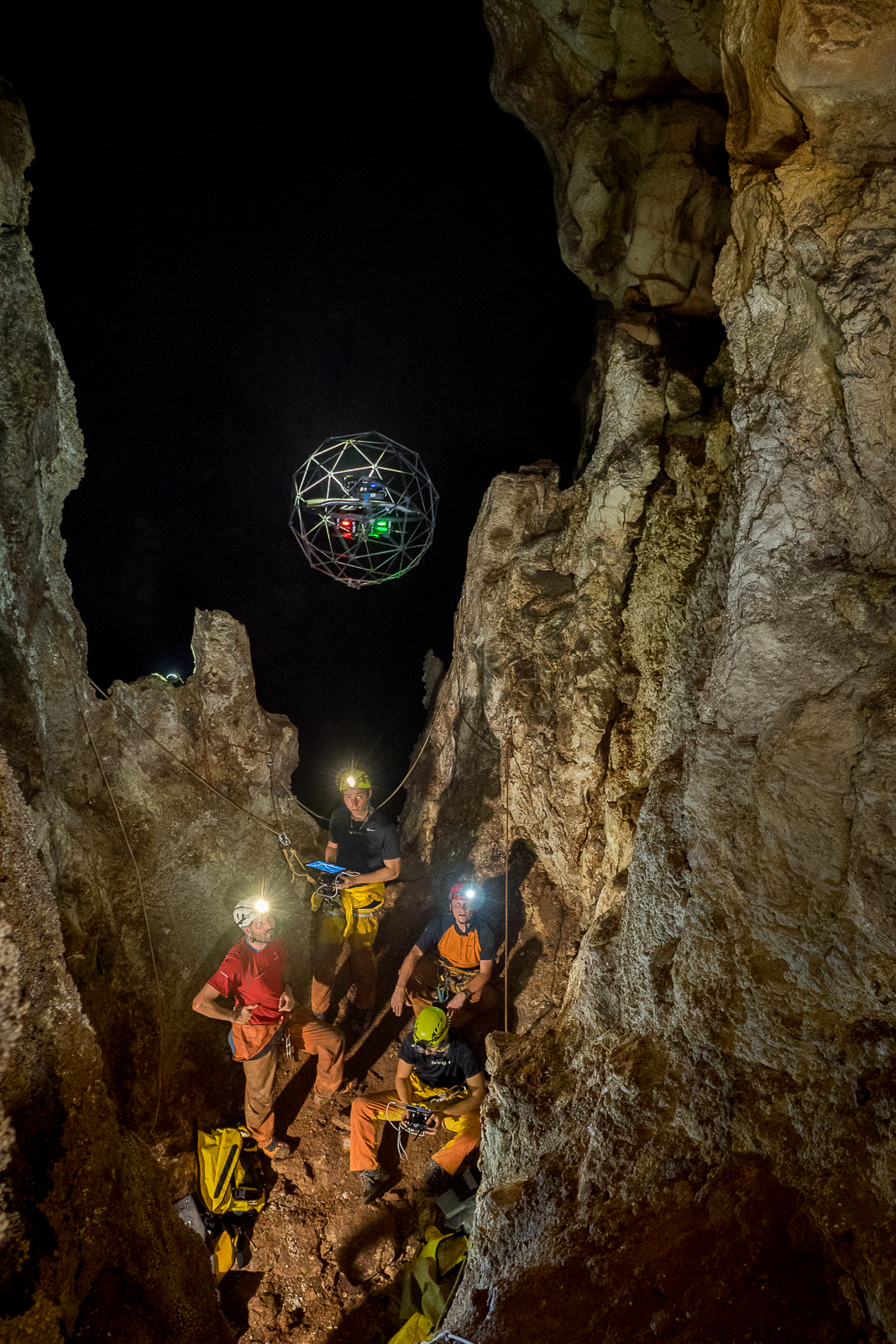
(Image Credit: ESA, Natalino Russo www.natalinorusso.it, CC BY-SA 3.0 IGO)

You might also like


Filed Under: Aerospace + defense


LEARNING CENTER

Design World Learning Center
“dw
EXPAND YOUR KNOWLEDGE AND STAY CONNECTED
Get the latest info on technologies, tools and strategies for Design Engineering Professionals.
Motor University

Design World Digital Edition

cover

Browse the most current issue of Design World and back issues in an easy to use high quality format. Clip, share and download with the leading design engineering magazine today.

EDABoard the Forum for Electronics

Top global problem solving EE forum covering Microcontrollers, DSP, Networking, Analog and Digital Design, RF, Power Electronics, PCB Routing and much more

EDABoard: Forum for electronics

Sponsored Content

  • Robot Integration with Rotary Index Tables and Auxiliary Axes
  • How to Choose the Right Rotary Index Table for Your Application
  • Designing a Robust Rotary Index Table: Engineering Best Practices for Long-Term Performance
  • Custom Integration Options for your New and Existing Rotary Table Applications
  • Tech Tips: Crossed Roller Bearing Update
  • Five Uses for the Parvalux Modular Range
View More >>
Engineering Exchange

The Engineering Exchange is a global educational networking community for engineers.

Connect, share, and learn today »

Design World
  • About us
  • Contact
  • Manage your Design World Subscription
  • Subscribe
  • Design World Digital Network
  • Control Engineering
  • Consulting-Specifying Engineer
  • Plant Engineering
  • Engineering White Papers
  • Leap Awards

Copyright © 2026 WTWH Media LLC. All Rights Reserved. The material on this site may not be reproduced, distributed, transmitted, cached or otherwise used, except with the prior written permission of WTWH Media
Privacy Policy | Advertising | About Us

Search Design World

  • Home
  • Technologies
    • ELECTRONICS • ELECTRICAL
    • Fastening • joining
    • FLUID POWER
    • LINEAR MOTION
    • MOTION CONTROL
    • SENSORS
    • TEST & MEASUREMENT
    • Factory automation
    • Warehouse automation
    • DIGITAL TRANSFORMATION
  • Learn
    • Tech Toolboxes
    • Learning center
    • eBooks • Tech Tips
    • Podcasts
    • Videos
    • Webinars • general engineering
    • Webinars • Automated warehousing
    • Voices
  • LEAP Awards
  • 2025 Leadership
    • 2024 Winners
    • 2023 Winners
    • 2022 Winners
    • 2021 Winners
  • Design Guides
  • Resources
    • 3D Cad Models
      • PARTsolutions
      • TraceParts
    • Digital Issues
      • Design World
      • EE World
    • Educational Assets
    • Engineering diversity
    • Reports
    • Trends
  • Supplier Listings
  • Advertise
  • SUBSCRIBE
    • MAGAZINE
    • NEWSLETTER
We use cookies to personalize content and ads, to provide social media features, and to analyze our traffic. We share information about your use of our site with our social media, advertising, and analytics partners who may combine it with other information you’ve provided to them or that they’ve collected from your use of their services. You consent to our cookies if you continue to use this website.