Design World

  • Home
  • Technologies
    • ELECTRONICS • ELECTRICAL
    • Fastening • joining
    • FLUID POWER
    • LINEAR MOTION
    • MOTION CONTROL
    • SENSORS
    • TEST & MEASUREMENT
    • Factory automation
    • Warehouse automation
    • DIGITAL TRANSFORMATION
  • Learn
    • Tech Toolboxes
    • Learning center
    • eBooks • Tech Tips
    • Podcasts
    • Videos
    • Webinars • general engineering
    • Webinars • Automated warehousing
    • Voices
  • LEAP Awards
  • 2025 Leadership
    • 2024 Winners
    • 2023 Winners
    • 2022 Winners
    • 2021 Winners
  • Design Guides
  • Resources
    • 3D Cad Models
      • PARTsolutions
      • TraceParts
    • Digital Issues
      • Design World
      • EE World
    • Educational Assets
    • Engineering diversity
    • Reports
    • Trends
  • Supplier Listings
  • Advertise
  • SUBSCRIBE
    • MAGAZINE
    • NEWSLETTER

Eyes in the Sky Aim to Protect Earth’s Rainforests, Resources

By Phys.org | September 17, 2018

(Image Source: Phys.org)

In the Brazilian state of Para, every week, authorities receive alerts showing them which parts of the Amazon forest have been chopped down, with photos to back it up.

The pictures are taken every day at 10:30 in the morning by American satellites, offering a detailed view of every three to five meters on the ground.

An algorithm helps reveal automatically where logging has taken place.

The authorities send agents to investigate and potentially apprehend the suspects before they do any more damage.

“It used to take six days, sometimes two or three months without images,” said Iara Musse Felix, CEO of SCCON, the company which distributes the alerts.

“Now we have daily images.”

This revolution in forest surveillance, and the Earth in general, comes from a constellation of satellites run by a company called Planet.

Founded in San Francisco in 2010 by three former NASA scientists, Planet is a leader in small satellites, which are easier to produce and replace, and tend to have mission lives of between three and five years.

This economic model is vastly at odds with the traditional aerospace industry, which builds large, sophisticated satellites that are far more powerful but take hundreds of millions of dollars to build.

Planet has placed 298 satellites in orbit since 2013, and half of those were launched last year.

Some 150 are active today, 130 of which are nanosatellites.

The rest have fallen back to Earth and burned up on re-entry to the atmosphere.
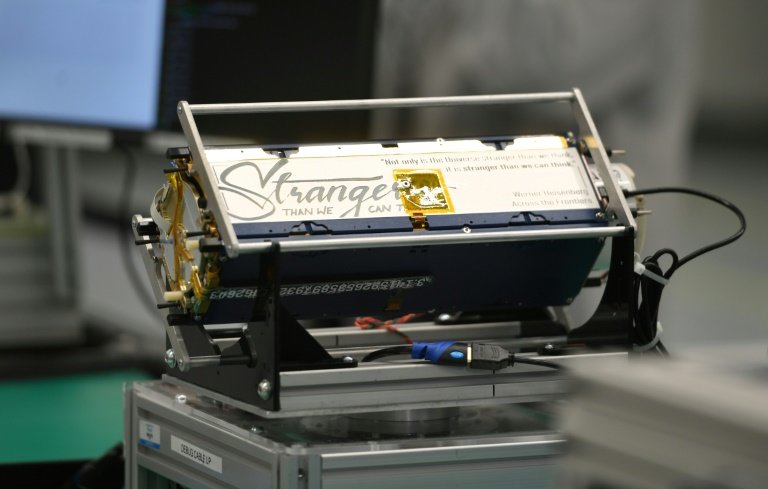
(Image Source: Phys.org)

‘Doves’

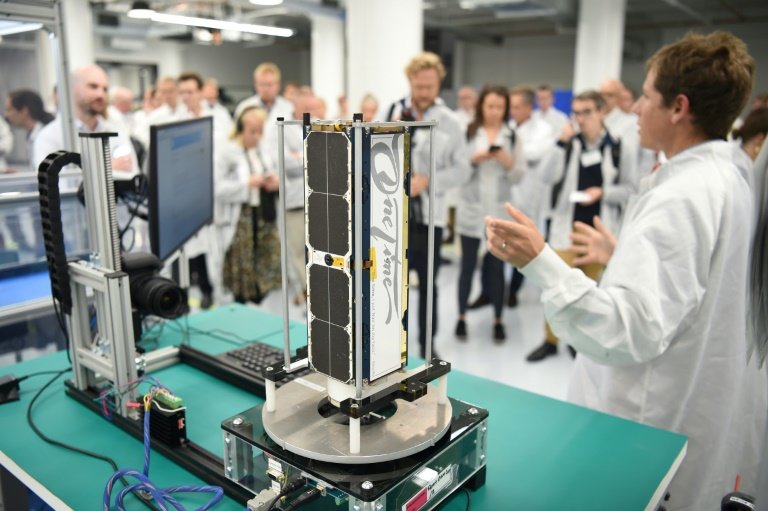
These so-called “Dove” satellites are made in San Francisco, at a new building presented this week during the Global Climate Action Summit here.

“One technician can build three Dove spacecrafts in a day,” said Chester Gillmore, 33, vice president of manufacturing at Planet.

“You need about 10 tools to build one of our satellites.”

There is no “clean room” here. Visitors walk in and out freely.

Electronic components are brought in on one side of the room, then tested, then assembled.

Doves are a format known as “Cubesat 3u,” including a 30-cm cylinder, equipped with an internal camera and two solar panels which unfold in orbit.

Six completed Doves wait on a cart to be sent to India, where they will be loaded onto a rocket and sent into orbit, some 300 miles (500 kilometers) above Earth.

We “just keep updating it,” said co-founder Robbie Schingler, a former employee of NASA.

“And that’s what we mastered, the ability to take the latest chips, and technologies, from other industries like automotive and consumer devices, take the 50 chips that are inside here… and then make them work in aerospace.”

The result is a daily image of every square kilometer of the Earth’s surface, accessible on the Internet.

The company still doesn’t turn a profit. But future opportunities abound for companies that want to launch Earth surveillance across the world, whether to track humanity’s actions on a global scale or to understand the prevalence of drought.

Another project financed by Microsoft co-founder Paul Allen involves surveilling coral reefs. Cameras on board the small Planet satellites allow researchers to see whether they are bleaching, dying, or growing.

When it comes to the Amazon rainforest, illegal loggers know that every day at 10:30 am, the “doves” are watching.

You might also like


Filed Under: Aerospace + defense


LEARNING CENTER

Design World Learning Center
“dw
EXPAND YOUR KNOWLEDGE AND STAY CONNECTED
Get the latest info on technologies, tools and strategies for Design Engineering Professionals.
Motor University

Design World Digital Edition

cover

Browse the most current issue of Design World and back issues in an easy to use high quality format. Clip, share and download with the leading design engineering magazine today.

EDABoard the Forum for Electronics

Top global problem solving EE forum covering Microcontrollers, DSP, Networking, Analog and Digital Design, RF, Power Electronics, PCB Routing and much more

EDABoard: Forum for electronics

Sponsored Content

  • Robot Integration with Rotary Index Tables and Auxiliary Axes
  • How to Choose the Right Rotary Index Table for Your Application
  • Designing a Robust Rotary Index Table: Engineering Best Practices for Long-Term Performance
  • Custom Integration Options for your New and Existing Rotary Table Applications
  • Tech Tips: Crossed Roller Bearing Update
  • Five Uses for the Parvalux Modular Range
View More >>
Engineering Exchange

The Engineering Exchange is a global educational networking community for engineers.

Connect, share, and learn today »

Design World
  • About us
  • Contact
  • Manage your Design World Subscription
  • Subscribe
  • Design World Digital Network
  • Control Engineering
  • Consulting-Specifying Engineer
  • Plant Engineering
  • Engineering White Papers
  • Leap Awards

Copyright © 2026 WTWH Media LLC. All Rights Reserved. The material on this site may not be reproduced, distributed, transmitted, cached or otherwise used, except with the prior written permission of WTWH Media
Privacy Policy | Advertising | About Us

Search Design World

  • Home
  • Technologies
    • ELECTRONICS • ELECTRICAL
    • Fastening • joining
    • FLUID POWER
    • LINEAR MOTION
    • MOTION CONTROL
    • SENSORS
    • TEST & MEASUREMENT
    • Factory automation
    • Warehouse automation
    • DIGITAL TRANSFORMATION
  • Learn
    • Tech Toolboxes
    • Learning center
    • eBooks • Tech Tips
    • Podcasts
    • Videos
    • Webinars • general engineering
    • Webinars • Automated warehousing
    • Voices
  • LEAP Awards
  • 2025 Leadership
    • 2024 Winners
    • 2023 Winners
    • 2022 Winners
    • 2021 Winners
  • Design Guides
  • Resources
    • 3D Cad Models
      • PARTsolutions
      • TraceParts
    • Digital Issues
      • Design World
      • EE World
    • Educational Assets
    • Engineering diversity
    • Reports
    • Trends
  • Supplier Listings
  • Advertise
  • SUBSCRIBE
    • MAGAZINE
    • NEWSLETTER
We use cookies to personalize content and ads, to provide social media features, and to analyze our traffic. We share information about your use of our site with our social media, advertising, and analytics partners who may combine it with other information you’ve provided to them or that they’ve collected from your use of their services. You consent to our cookies if you continue to use this website.