
A sampling of what’s happening in the world of motion controllers reveals evolutionary changes especially in networking and communications.

Fig 1: Lenze’s ECS servo system now comes with an optional clock-synchronised EtherCAT interface which when combined with the company’s new L -force Controller 3200 C is ideal for central control architectures.
Motion controllers are continuing to evolve and meet the challenges of cutting-edge motion applications. They’re changing by adding support for motion network protocols such as EtherCat, building out other Ethernet-based networks, and continuing to add advanced motion functions beyond the traditional ones. These changes are happening across the board, with stand-alone controllers, PC-based controllers, as well as programmable logic controllers (PLCs) and programmable automation controllers (PACs).
Motion over Ethernet/IP
Rockwell is a company that has built on its Ethernet legacy with its Integrated Motion over Ethernet/IP, which allows motion control signals to be transmitted using the same protocol as other automation functions. The offering of Motion over Ethernet uses the Common Industrial Protocol (CIP) and CIP Sync technologies from the Open Device Vendor Association (ODVA), and lets you avoid the use of a specialized motion control network and integrate more functions over one common network protocol. Now you have the option of using one integrated motion control network, rather than taking different protocols and integrating them yourself. The offering promises to optimize machine design flexibility, reduce overall system costs and improve system performance.

Fig 2: Rockwell’s new Integrated Motion over EtherNet/IP allows you to program, commission, configure and maintain servo drives such as the company’s Kinetix 6500, all over EtherNet/IP.
Introducing motion over EtherNet/IP gives you the ability to side step the reliance on special motion protocols, such as SERCOS. Thus, it removes the final remaining barrier preventing the adoption of a complete, single, integrated network that’s capable of integrating safety, process and discrete control.
Rockwell states that EtherNet/IP is for the most part identical to standard Ethernet with the main difference being in the Application Layer. It uses standard, unmodified Ethernet, and helps you manage real-time control and information flow for better plant operation, more informed decision-making, and better business performance.
Other manufacturers use Ethernet as well but use only the first physical layer—adding software on top of it—which makes the actual protocol proprietary. This means that although they can claim ‘Ethernet compatibility’, it is, in fact, just as closed as any other proprietary protocol.
With EtherNet/IP, machine builders can program, commission, configure and maintain PowerFlex 755 AC drives and Kinetix 6500 servo drives with the processing capabilities of Allen-Bradley ControlLogix 557X PACs.
EtherNet/IP uses standard infrastructure components, switches and tools and offers assured determinism, regardless of device type and mix. Especially important for motion applications, it’s capable of 100 ns time synchronization of distributed devices and 100 µs time-scheduled output and time-stamped input I/O.
In addition to the benefits of a single-network environment, there are other advantages from a single-software environment. Expanding on its process control, discrete control and safety capabilities, 41 embedded motion instructions—available in Ladder, Structured Text and Sequential Function Chart languages—are available from the RSLogix 5000 software. The single-software environment features complete system support, including motion configuration, programming, commissioning, diagnostics and drive maintenance. This single-software approach means fewer licenses, fewer compatibility issues and a significantly reduced training burden.
EtherCAT
In motion applications needing a high degree of precision, accuracy and speed, the EtherCAT standard has been seeing more and more duty as a standard bearer for this specialized area of motion control. Manufacturers are adding EtherCAT capability as part of their standard offering.
One example of this trend comes from Lenze, in particular its L-force Controller 3200 C with EtherCAT. The company’s ECS servo system now comes with a clock-synchronized EtherCAT interface. With the interface, servo drives deliver dynamic performance, which is vital in motion tasks requiring the highest precision and speed. Engineered for multi-axis applications in central control architecture, the new system, when combined with new L-force Controller 3200 C, is said to solve the most demanding and complex motion tasks in terms of precision and the number of axes required.
Based on the energy-efficient Intel Atom processor, the L-force Controller 3200 C is designed for use in the control cabinet. The integrated 48 MBit/s backplane bus enables I/O modules from the I/O system 1000 to be side-mounted to the controller. A combination of the time stamp with the short cycle time and the minimum jitter ensures that the motion system conforms to speed and synchronism requirements.
The versatile system also provides an array of axis and power supply modules which can be easily connected to produce an integrated unit, while the ECS drives are compatible with the MCS range’s highly dynamic motors. The drives can be also combined with asynchronous and synchronous motors.
New PLC family
On the PLC side of things, Bosch Rexroth has come out with a family of controllers known as the IndraLogic XLC (eXtended Logic Control) PLC family, which enables scalable, controller-based and embedded PC solutions in conjunction with the company’s latest IndraControl device platform.
These controllers feature capabilities that go beyond standard PLC functions. You can leverage a range of functions that achieve modular software projects quickly. All planning, configuration, programming and diagnostic functions are standardized in one engineering environment, with flexible motion control functions fully integrated. IndraLogic XLC can be connected into different communication networks thanks to real-time communication through SERCOS III and other common communication interfaces.

Fig. 3: The IndraLogic XLC PLC family from Bosch Rexroth features a full range of PLC functions such as comprehensive function libraries, object orientation as an extension to IEC 61131-3, convenient editor tools and fast compilers for efficient production of machine codes.
A state-of-the-art PLC kernel, IndraLogic 2G, is integrated into the company’s IndraWorks software tool and the multitasking runtime system. This lets you take advantage of many new functions for creating modular software projects in an end-to-end overall system in less time than before. Functions include convenient editor tools, object orientation as an extension to IEC 61131-3, and comprehensive function libraries as well as fast compilers for efficient generation of machine codes. The modular GATcompact (Generic Application Template) project template also simplifies the process of designing new machines by in part reducing effort considerably.
End-to-end communication between the controller and decentralized system peripherals, such as inputs and outputs or drives, takes place through real-time Ethernet SERCOS III. Fast PLC cycles to 250 µs enable good response times for handling time-critical process signals. IndraLogic XLC controllers come with versatile motion control functions, integrated into the run-time systems, to enhance the previous IndraLogic systems.
With its motion control functions, the XLC handles machine applications ranging from simple point-to-point motion to the synchronization of multiple axes that use Rexroth’s FlexProfile to integrate complex motion sequences. The graphical profile editor in the Rexroth IndraWorks software tool offers numerous offline and online functions for this purpose. Master and slave interfaces for PROFINET RT, PROFIBUS and EtherNet/IP are also available, in addition to SERCOS III, for integrating into a wide range of communication networks.
General-purpose controllers
Delta Tau Data Systems has taken the leap into a more innovative and useful general-purpose control format for OEMs as well as end-users. Their Power PMAC Motion and Machine Controller features a full-featured real-time operating system. With the latest embedded hardware, the unit is said to provide the highest level of peripheral integration on the market, while maintaining the lower power consumption needed for most applications.
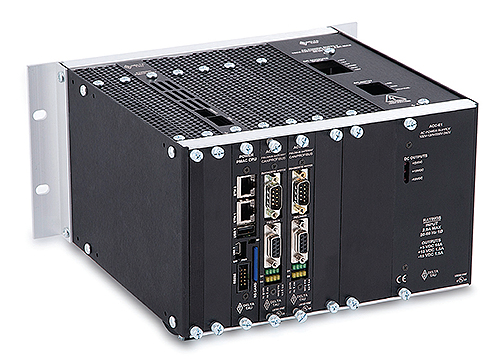
Fig. 4: Delta Tau’s new Power PMAC Motion and Machine Controller can be used anywhere along the spectrum of applications from dedicated controller to general-purpose computer that provides built-in routines to command moves via the most common programming languages such as G-Code and LabVIEW.
You no longer have to be locked into a particular motion control format and interface. The Power PMAC operates as a hub to the overall system, making it possible to interface with almost any remote device through the Power PMAC’s open hardware and software architecture.
The unit can be used anywhere along the spectrum of applications from dedicated controller to general-purpose computer that provides built-in routines to command the occasional move easily through the use of most popular programming languages. This gives you the best of both worlds. The controller can be programmed in several languages simultaneously, including the Power PMAC’s built-in Script Language that can handle motion sequences as well as general machine and I/O logic; industry standard graphical programming in any of five formats specified in IEC-61131 including ladder logic and sequential function charts; and in C for advanced programmers for servo, phase, PLC and general-purpose applications. Other languages accepted include G-Code, MatLab™/Simulink, LabVIEW™ and EPICS.
Features of the Power PMAC include an 800 MHz or 1 GHz RISC processor with hardware floating-point engine; up to 4 Gbytes of error-correcting RAM; 100-Base-T and 1000-Base T Ethernet TCP/IP communications; standard interfaces to support keyboards, video cameras, disk drives, and other peripherals; built-in web server to support direct browser access for development and maintenance; the ability to control up to 256 motors in up to 128 independent coordinate systems simultaneously; and the ability to accept RS-274 G-code programs.
Lenze, Rockwell Automation, Bosch Rexroth, Delta Tau Data Systems
Company web sites:
www.lenze.com
www.rockwellautomation.com
www.boschrexroth-us.com
www.deltatau.com
Filed Under: Factory automation, ENGINEERING SOFTWARE, Drives (servo) + amplifiers, Motion control • motor controls, PLCs + PACs

Tell Us What You Think!