Design World

  • Home
  • Technologies
    • ELECTRONICS • ELECTRICAL
    • Fastening • joining
    • FLUID POWER
    • LINEAR MOTION
    • MOTION CONTROL
    • SENSORS
    • TEST & MEASUREMENT
    • Factory automation
    • Warehouse automation
    • DIGITAL TRANSFORMATION
  • Learn
    • Tech Toolboxes
    • Learning center
    • eBooks • Tech Tips
    • Podcasts
    • Videos
    • Webinars • general engineering
    • Webinars • Automated warehousing
    • Voices
  • LEAP Awards
  • 2025 Leadership
    • 2024 Winners
    • 2023 Winners
    • 2022 Winners
    • 2021 Winners
  • Design Guides
  • Resources
    • 3D Cad Models
      • PARTsolutions
      • TraceParts
    • Digital Issues
      • Design World
      • EE World
    • Educational Assets
    • Engineering diversity
    • Reports
    • Trends
  • Supplier Listings
  • Advertise
  • SUBSCRIBE
    • MAGAZINE
    • NEWSLETTER

NASA Test Fires New Rocket with Army Motor

By AMRDEC Public Affairs | February 26, 2015

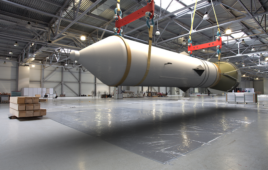
When the NASA Marshall Space Flight Center test fired the Peregrine rocket, Feb. 10, members of the local Army research and development community watched with great interest.

The igniter motor for the NASA Peregrine was developed and characterized by U.S. Army Aviation and Missile Research, Development and Engineering Center, or AMRDEC, engineers in a unique collaborative effort between the two agencies.

Read: New Process to Save Army Money, Yield Cheaper Rounds

“Characterized” describes the testing of propellants to determine their properties.

The event at NASA’s Marshall Space Flight Center was the first test of a completely new motor design that incorporated several advanced technologies to reduce costs.

The NASA Peregrine igniter effort is the most recent in a series of collaborative propulsion efforts between AMRDEC and the flight center.

“AMRDEC has been working with NASA for approximately the past eight years in many phases of rocket propulsion,” said Christi Dolbeer, chief of energetic materials function for AMRDEC’s Weapons Development and Integration Division. “AMRDEC provided propulsion technical expertise and energetic processing and handling capabilities in support of this effort.”

Read: Devices May Help Soldiers Nose Out Bio Threats

Dolbeer said AMRDEC developed and characterized both the Peregrine boost motor and igniter motor propellants. Recently, AMRDEC loaded and assembled several pyrogen igniter motors to support Peregrine development testing.

While the Peregrine rocket motor experienced some abnormalities during the test fire, AMRDEC’s igniter performed as expected. In addition to demonstrating the capabilities of the rocket, the effort also emphasized the cooperative nature of organizations on Redstone Arsenal.

“[The test fire] demonstrates the great Team Redstone partnership AMRDEC holds with NASA Marshall Space Flight Center,” said James. B. Lackey, AMRDEC director, who was present for the test fire. “While our overarching public service missions may differ, the underlying engineering and technologies do have mutual support intersections. The laws of physics and engineering principles are the same no matter how they are applied.”

Lackley said these are the types of partnership arrangements, “where you see the power of maximizing taxpayer dollar use in the most efficient manner.”

“We learn from one another and as a result produce better products for our end user applications,” Lackley said. “Most significantly, this rocket motor was made in America. While humble in size compared to larger-manned supported propulsion systems, this effort with NASA signifies a departure on foreign sourcing of rocket motors and reaffirms our commitment as a nation to refocus our technologies and technical skills for our very own national priorities.”

According to NASA, Peregrine aims to improve performance by 15 percent and reduce flight issues encountered by current sounding rockets used for everything from science observations to technology development. Peregrine is the first motor developed by NASA for the suborbital program under the agency’s Science Mission Directorate.

The test flight of the rocket motor, planned for March, has been postponed until results from static test have been analyzed and NASA determines its next steps forward.

You might also like


Filed Under: Aerospace + defense


LEARNING CENTER

Design World Learning Center
“dw
EXPAND YOUR KNOWLEDGE AND STAY CONNECTED
Get the latest info on technologies, tools and strategies for Design Engineering Professionals.
Motor University

Design World Digital Edition

cover

Browse the most current issue of Design World and back issues in an easy to use high quality format. Clip, share and download with the leading design engineering magazine today.

EDABoard the Forum for Electronics

Top global problem solving EE forum covering Microcontrollers, DSP, Networking, Analog and Digital Design, RF, Power Electronics, PCB Routing and much more

EDABoard: Forum for electronics

Sponsored Content

  • Five Uses for the Parvalux Modular Range
  • Robot Integration with Rotary Index Tables and Auxiliary Axes
  • How to Choose the Right Rotary Index Table for Your Application
  • Designing a Robust Rotary Index Table: Engineering Best Practices for Long-Term Performance
  • Custom Integration Options for your New and Existing Rotary Table Applications
  • How Apple Rubber’s Rapid Prototyping Kept Whale Research Afloat
View More >>
Engineering Exchange

The Engineering Exchange is a global educational networking community for engineers.

Connect, share, and learn today »

Design World
  • About us
  • Contact
  • Manage your Design World Subscription
  • Subscribe
  • Design World Digital Network
  • Control Engineering
  • Consulting-Specifying Engineer
  • Plant Engineering
  • Engineering White Papers
  • Leap Awards

Copyright © 2026 WTWH Media LLC. All Rights Reserved. The material on this site may not be reproduced, distributed, transmitted, cached or otherwise used, except with the prior written permission of WTWH Media
Privacy Policy | Advertising | About Us

Search Design World

  • Home
  • Technologies
    • ELECTRONICS • ELECTRICAL
    • Fastening • joining
    • FLUID POWER
    • LINEAR MOTION
    • MOTION CONTROL
    • SENSORS
    • TEST & MEASUREMENT
    • Factory automation
    • Warehouse automation
    • DIGITAL TRANSFORMATION
  • Learn
    • Tech Toolboxes
    • Learning center
    • eBooks • Tech Tips
    • Podcasts
    • Videos
    • Webinars • general engineering
    • Webinars • Automated warehousing
    • Voices
  • LEAP Awards
  • 2025 Leadership
    • 2024 Winners
    • 2023 Winners
    • 2022 Winners
    • 2021 Winners
  • Design Guides
  • Resources
    • 3D Cad Models
      • PARTsolutions
      • TraceParts
    • Digital Issues
      • Design World
      • EE World
    • Educational Assets
    • Engineering diversity
    • Reports
    • Trends
  • Supplier Listings
  • Advertise
  • SUBSCRIBE
    • MAGAZINE
    • NEWSLETTER
We use cookies to personalize content and ads, to provide social media features, and to analyze our traffic. We share information about your use of our site with our social media, advertising, and analytics partners who may combine it with other information you’ve provided to them or that they’ve collected from your use of their services. You consent to our cookies if you continue to use this website.