Design World

  • Home
  • Technologies
    • ELECTRONICS • ELECTRICAL
    • Fastening • joining
    • FLUID POWER
    • LINEAR MOTION
    • MOTION CONTROL
    • SENSORS
    • TEST & MEASUREMENT
    • Factory automation
    • Warehouse automation
    • DIGITAL TRANSFORMATION
  • Learn
    • Tech Toolboxes
    • Learning center
    • eBooks • Tech Tips
    • Podcasts
    • Videos
    • Webinars • general engineering
    • Webinars • Automated warehousing
    • Voices
  • LEAP Awards
  • 2025 Leadership
    • 2024 Winners
    • 2023 Winners
    • 2022 Winners
    • 2021 Winners
  • Design Guides
  • Resources
    • 3D Cad Models
      • PARTsolutions
      • TraceParts
    • Digital Issues
      • Design World
      • EE World
    • Educational Assets
    • Engineering diversity
    • Reports
    • Trends
  • Supplier Listings
  • Advertise
  • SUBSCRIBE
    • MAGAZINE
    • NEWSLETTER

New Research Identifies How 3-D Printed Metals Can Be Both Strong and Ductile

By University of Birmingham | December 11, 2017

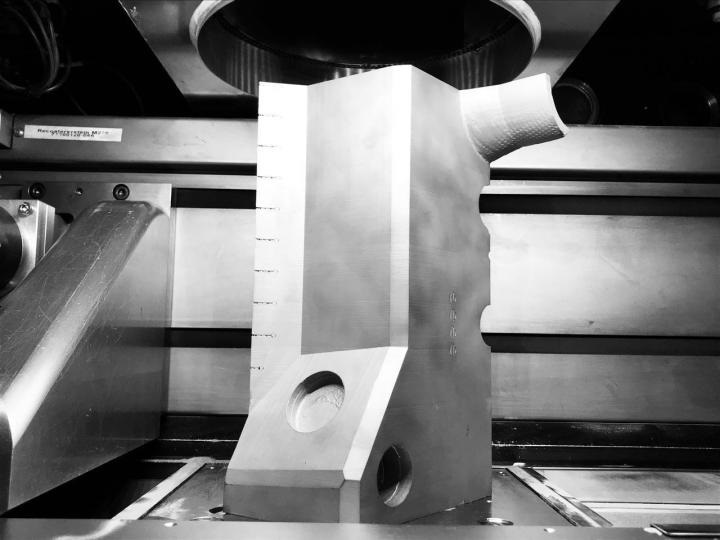
A 3-D printed part for a nuclear fusion test reactor. Image credit: Leifeng Liu, University of Birmingham

A new technique for 3D printing metals, involving a widely used stainless steel, has been shown to achieve exceptional levels of both strength and ductility when compared to more conventional processes.

The findings, published in Materials Today, outline how a joint research team including researchers from the University of Birmingham, Stockholm University, Sweden and Zhejiang University were able to optimize the process parameters during 3D printing to achieve these results.

The research is contrary to the sceptcism around the ability to make strong and ductile metals through 3D printing, and as such the discovery is crucial to moving the technology forward for the manufacturing of heavy duty parts.

3D printing has long been recognized as a technology which can potentially change our way of manufacturing, allowing us to rapidly build up objects with complex and customized geometries. With the accelerating development of the technology in recent years, 3D printing, especially metal 3D printing, is quickly progressing toward widespread industrial use. Indeed, the manufacturing giant General Electric (GE) has already been using metal 3D printing to produce some key parts, such as the fuel nozzles in their latest LEAP aircraft engine. The technology helps GE to reduce 900 separate components into just 16, and make fuel nozzles 40 percent lighter and 60 percent cheaper.

The global revenue from the industry is forecasted to be over 20 billion USD per year by 2025. Despite the bright future, the quality of the products from metal 3D printing has been prone to scepticism. In most metal 3D printing processes, products are directly built up from metal powders, which makes them susceptible to defects, thus causing the deterioration of their mechanical properties.

Dr. Leifeng Liu, the main participant of the project, recently moved to the University of Birmingham from Stockholm University as an AMCASH research fellow. He said, “Strength and ductility are natural enemies of one another; most methods developed to strengthen metals consequently reduce ductility. The 3D printing technique is known to produce objects with previously inaccessible shapes, and our work shows that it also provides the possibility to produce the next generation of structural alloys with significant improvements in both strength and ductility.”

This has been made possible thanks to the ultrafast cooling rate, estimated to range from 1000oC per second to 100 million oC per second – something that was not possible in bulk metal production process until the emergence of 3D printing.

Metals that are cooled down so quickly result in a so-called non-equilibrium state, allowing for some amazing microstructures like the sub-micro-sized dislocation network – which was revealed in this paper to be the main reason for the improved mechanical properties.

“This work gives researchers a brand new tool to design new alloy systems with ultra-mechanical properties,” Liu said. “It also helps metal 3D printing gain access into the fields where high mechanical properties are required, like structural parts in aerospace and automotive industry.”

Dr. Yu-Lung Chiu, Dr. Ji Zou and Dr. Jing Wu, all from School of Metallurgy and Materials at the University of Birmingham, comprise the Birmingham team in this research. Dr. Chiu, who is in charge of the Electron Microscopy Centre, has established a micro and nano material testing system inside the electron microscopes which makes it possible to analyse in-situ the performance and mechanism of the sample during mechanical tests. It greatly helps to identify effective microstructural features for improved properties and, more importantly, to understand the mechanisms.

You might also like


Filed Under: Materials • advanced


LEARNING CENTER

Design World Learning Center
“dw
EXPAND YOUR KNOWLEDGE AND STAY CONNECTED
Get the latest info on technologies, tools and strategies for Design Engineering Professionals.
Motor University

Design World Digital Edition

cover

Browse the most current issue of Design World and back issues in an easy to use high quality format. Clip, share and download with the leading design engineering magazine today.

EDABoard the Forum for Electronics

Top global problem solving EE forum covering Microcontrollers, DSP, Networking, Analog and Digital Design, RF, Power Electronics, PCB Routing and much more

EDABoard: Forum for electronics

Sponsored Content

  • Five Uses for the Parvalux Modular Range
  • Robot Integration with Rotary Index Tables and Auxiliary Axes
  • How to Choose the Right Rotary Index Table for Your Application
  • Designing a Robust Rotary Index Table: Engineering Best Practices for Long-Term Performance
  • Custom Integration Options for your New and Existing Rotary Table Applications
  • How Apple Rubber’s Rapid Prototyping Kept Whale Research Afloat
View More >>
Engineering Exchange

The Engineering Exchange is a global educational networking community for engineers.

Connect, share, and learn today »

Design World
  • About us
  • Contact
  • Manage your Design World Subscription
  • Subscribe
  • Design World Digital Network
  • Control Engineering
  • Consulting-Specifying Engineer
  • Plant Engineering
  • Engineering White Papers
  • Leap Awards

Copyright © 2026 WTWH Media LLC. All Rights Reserved. The material on this site may not be reproduced, distributed, transmitted, cached or otherwise used, except with the prior written permission of WTWH Media
Privacy Policy | Advertising | About Us

Search Design World

  • Home
  • Technologies
    • ELECTRONICS • ELECTRICAL
    • Fastening • joining
    • FLUID POWER
    • LINEAR MOTION
    • MOTION CONTROL
    • SENSORS
    • TEST & MEASUREMENT
    • Factory automation
    • Warehouse automation
    • DIGITAL TRANSFORMATION
  • Learn
    • Tech Toolboxes
    • Learning center
    • eBooks • Tech Tips
    • Podcasts
    • Videos
    • Webinars • general engineering
    • Webinars • Automated warehousing
    • Voices
  • LEAP Awards
  • 2025 Leadership
    • 2024 Winners
    • 2023 Winners
    • 2022 Winners
    • 2021 Winners
  • Design Guides
  • Resources
    • 3D Cad Models
      • PARTsolutions
      • TraceParts
    • Digital Issues
      • Design World
      • EE World
    • Educational Assets
    • Engineering diversity
    • Reports
    • Trends
  • Supplier Listings
  • Advertise
  • SUBSCRIBE
    • MAGAZINE
    • NEWSLETTER
We use cookies to personalize content and ads, to provide social media features, and to analyze our traffic. We share information about your use of our site with our social media, advertising, and analytics partners who may combine it with other information you’ve provided to them or that they’ve collected from your use of their services. You consent to our cookies if you continue to use this website.