Design World

  • Home
  • Technologies
    • ELECTRONICS • ELECTRICAL
    • Fastening • joining
    • FLUID POWER
    • LINEAR MOTION
    • MOTION CONTROL
    • SENSORS
    • TEST & MEASUREMENT
    • Factory automation
    • Warehouse automation
    • DIGITAL TRANSFORMATION
  • Learn
    • Tech Toolboxes
    • Learning center
    • eBooks • Tech Tips
    • Podcasts
    • Videos
    • Webinars • general engineering
    • Webinars • Automated warehousing
    • Voices
  • LEAP Awards
  • 2026 Leadership
    • 2025 Winners
    • 2024 Winners
    • 2023 Winners
    • 2022 Winners
    • 2021 Winners
  • Design Guides
  • Resources
    • 3D Cad Models
      • PARTsolutions
      • TraceParts
    • Digital Issues
      • Design World
      • EE World
    • Educational Assets
    • Engineering diversity
    • Reports
    • Trends
  • Supplier Listings
  • Advertise
  • SUBSCRIBE
    • MAGAZINE
    • NEWSLETTER

Pods vs. Water Lubricated Props

By Marisa Martin | August 24, 2016

FacebookTwitterGoogle+LinkedInPinterestShare

Thordon Bearings has called on the marine industry to investigate the characteristics of both conventional seawater-lubricated propeller shaft systems and podded propulsion arrangements in order to provide shipowners with a better understanding of the two very different propulsion configurations. Pict_for_WP
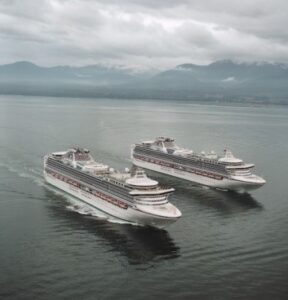
In a recently published White Paper, the Canadian manufacturer of the COMPAC seawater-lubricated propeller shaft bearing system believes there is a great opportunity for independent comparative data so that cruiseship operators, in particular, can make more informed procurement decisions.

Highlighting the development of both systems, the 24 page paper asks if the water-lubricated propeller shaft is more efficient than podded propulsion, encouraging readers to assess a number of different factors before selecting their optimum propulsion solution.

The paper explores the key advantages and disadvantages of both arrangements, arguing the case for the conventional propeller shaft configuration due to its lower capital expenditure, reduced operating costs, zero pollution risk, life expectancy, low noise and vibration, manoeuvrability and survivability.

While acknowledging that greater research is needed, Thordon Bearings’ argument for convention is supported by several high-profile marine engineers with first-hand experience of both concepts, one of whom said he was “never able to ascertain with any certainty that the capital and through life costs of a podded propulsion system were any less than those for conventional drive arrangements”.

Other supporters of convention claim in the paper that a conventional passenger ship with a rounded skeg hull shape, twin six-blade fixed pitch propeller and a seawater lubricated shaft line, with appendages optimised using computational fluid dynamics, is comparable to a podded cruiseship in terms of hydrodynamic efficiency.

“According to press reports, cruiseships fitted with pods continue to suffer from system failures, resulting in downtime, emergency repairs and drydocking, all of which add to the high capital and operational costs of installation. Concerns have also been raised about the handling of ships with propulsive pods in certain manoeuvring conditions, which is different to the handling of a direct-drive vessel,” said Craig Carter, Director of Marketing and Customer Service, Thordon Bearings.

“While our paper does not purport to be an academic study in any way, it is intended to engender debate and, hopefully, spur greater research into the key attributes of both propulsion arrangements” he added.

“Much of the research to date has focused on the manoeuvrability and hydrodynamic efficiency benefits of a cruiseship with podded propulsion, but this does not paint the complete picture. Owners have to also consider environmental, operational, safety, CAPEX and OPEX differences between podded and direct-drive configurations so that the cruiseship sector in particular can make more informed procurement decisions.”

Thornson Bearings
thordonbearings.com

The post Pods vs. Water Lubricated Props appeared first on Bearing Tips.

You might also like


Filed Under: Bearing Tips
Tagged With: thornsonbearings
 

LEARNING CENTER

Design World Learning Center
“dw
EXPAND YOUR KNOWLEDGE AND STAY CONNECTED
Get the latest info on technologies, tools and strategies for Design Engineering Professionals.
Motor University

Design World Digital Edition

cover

Browse the most current issue of Design World and back issues in an easy to use high quality format. Clip, share and download with the leading design engineering magazine today.

EDABoard the Forum for Electronics

Top global problem solving EE forum covering Microcontrollers, DSP, Networking, Analog and Digital Design, RF, Power Electronics, PCB Routing and much more

EDABoard: Forum for electronics

Sponsored Content

  • How do position encoders improve gimbal performance?
  • From film to tape: Engineering for low outgassing in space
  • For the machines that don’t take days off. How Electrification Is Reshaping On- and Off-Road Machinery.
  • CASE STUDY: Inside ThredUp’s High-Tech Transformation of Its Four-Story Conveyor System
  • Performance Starts with Precision Cuts
  • eBook: Setting The Standard For Precise Alignment
View More >>
Engineering Exchange

The Engineering Exchange is a global educational networking community for engineers.

Connect, share, and learn today »

Design World
  • About us
  • Contact
  • Manage your Design World Subscription
  • Subscribe
  • Design World Digital Network
  • Control Engineering
  • Consulting-Specifying Engineer
  • Plant Engineering
  • Engineering White Papers
  • Leap Awards

Copyright © 2026 WTWH Media LLC. All Rights Reserved. The material on this site may not be reproduced, distributed, transmitted, cached or otherwise used, except with the prior written permission of WTWH Media
Privacy Policy | Advertising | About Us

Search Design World

  • Home
  • Technologies
    • ELECTRONICS • ELECTRICAL
    • Fastening • joining
    • FLUID POWER
    • LINEAR MOTION
    • MOTION CONTROL
    • SENSORS
    • TEST & MEASUREMENT
    • Factory automation
    • Warehouse automation
    • DIGITAL TRANSFORMATION
  • Learn
    • Tech Toolboxes
    • Learning center
    • eBooks • Tech Tips
    • Podcasts
    • Videos
    • Webinars • general engineering
    • Webinars • Automated warehousing
    • Voices
  • LEAP Awards
  • 2026 Leadership
    • 2025 Winners
    • 2024 Winners
    • 2023 Winners
    • 2022 Winners
    • 2021 Winners
  • Design Guides
  • Resources
    • 3D Cad Models
      • PARTsolutions
      • TraceParts
    • Digital Issues
      • Design World
      • EE World
    • Educational Assets
    • Engineering diversity
    • Reports
    • Trends
  • Supplier Listings
  • Advertise
  • SUBSCRIBE
    • MAGAZINE
    • NEWSLETTER