Design World

  • Home
  • Technologies
    • ELECTRONICS • ELECTRICAL
    • Fastening • joining
    • FLUID POWER
    • LINEAR MOTION
    • MOTION CONTROL
    • SENSORS
    • TEST & MEASUREMENT
    • Factory automation
    • Warehouse automation
    • DIGITAL TRANSFORMATION
  • Learn
    • Tech Toolboxes
    • Learning center
    • eBooks • Tech Tips
    • Podcasts
    • Videos
    • Webinars • general engineering
    • Webinars • Automated warehousing
    • Voices
  • LEAP Awards
  • 2025 Leadership
    • 2024 Winners
    • 2023 Winners
    • 2022 Winners
    • 2021 Winners
  • Design Guides
  • Resources
    • 3D Cad Models
      • PARTsolutions
      • TraceParts
    • Digital Issues
      • Design World
      • EE World
    • Educational Assets
    • Engineering diversity
    • Reports
    • Trends
  • Supplier Listings
  • Advertise
  • SUBSCRIBE
    • MAGAZINE
    • NEWSLETTER

System-Level modeling is a smarter approach to vehicle design

By Leslie Langnau | October 4, 2018

The demand for innovation is universal across industries, as new products are required to meet higher performance standards without slowing the overall time to market. This reality is perhaps most apparent in the automotive industry, where a wide range of technologies must come together seamlessly if a new product is to be successful. At China Euro Vehicle Technology (CEVT), new development techniques are being created to bring new technologies into passenger vehicles, and ensure successful integration of the many systems present in modern designs.
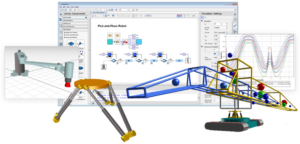
One of the more advanced technologies available for modern automotive design is system-level modeling, which uses specialized software to model the interactions across an entire system. By taking a system-level modeling approach, CEVT engineer Michael Palander is creating a powerful testing and simulation platform that can be used to verify the functionality of their new automotive technologies at earlier stages in the design process. With its Modelica standard for system-modeling components, the team decided to evaluate MapleSim as the modeling and simulation tool for their larger simulation platform.

The team at CEVT is aiming to create a powerful simulation platform that can validate a wide range of design components, from software controllers to individual hardware subsystems, in what is known as “in-the-loop” simulations. For these kinds of simulations, the system-level models are created not only to be highly accurate, but they must be capable of very efficient computation for real-time usage on test platforms. They chose MapleSim for its ability to create efficient royalty-free code that can run in real-time.

In order to avoid the slowdowns typically involved with taking on a new modeling tool, the Chalmers research team opted for customized training services provided by Maplesoft Engineering Solutions. During a three-day training program, modeling experts from Maplesoft worked directly with the research team, helping them become proficient with MapleSim. The team quickly worked through the basics of model creation, before moving on to training related to their specific project needs, including code generation, exporting models to the Functional Mock-up Interface (FMI) standard, and creating custom components to account for their specific designs. “It’s very easy to get started with MapleSim,” noted Mr. Palander, as he observed his team moving quickly through their design-specific modeling needs.

By working with Maplesoft’s modeling experts, the teams at Chalmers and CEVT were able to easily and efficiently develop workable processes for integrating MapleSim with their own tools, such as their simulation platform, CarMaker. They now use MapleSim to create vehicle models and export them into Functional Mock-up Units (FMUs), which then connect into the rest of their toolchain. The training also provided the engineers and researchers with MapleSim model optimization techniques so they could make quick iterations on design concepts before moving their testing to their in-the-loop simulation platforms.

The approach taken by CEVT in evaluating MapleSim and training as a team in system-level modeling is a sign of their larger commitment to new, innovative approaches in vehicle design. By looking to integrate powerful system-level modeling tools like MapleSim, CEVT is maintaining its position as a leader in virtual engineering techniques. CEVT also ensured they stayed competitive by using Maplesoft’s Engineering Solutions to evaluate their new software as quick as possible. With help from MapleSim, Mr. Palander is confident that CEVT’s system-level modeling project is proceeding in the right direction: “We will succeed in this, I am absolutely sure.”

Maplesoft
www.maplesoft.co

You might also like


Filed Under: 3D CAD World
Tagged With: maplesoft
 

LEARNING CENTER

Design World Learning Center
“dw
EXPAND YOUR KNOWLEDGE AND STAY CONNECTED
Get the latest info on technologies, tools and strategies for Design Engineering Professionals.
Motor University

Design World Digital Edition

cover

Browse the most current issue of Design World and back issues in an easy to use high quality format. Clip, share and download with the leading design engineering magazine today.

EDABoard the Forum for Electronics

Top global problem solving EE forum covering Microcontrollers, DSP, Networking, Analog and Digital Design, RF, Power Electronics, PCB Routing and much more

EDABoard: Forum for electronics

Sponsored Content

  • Five Uses for the Parvalux Modular Range
  • Robot Integration with Rotary Index Tables and Auxiliary Axes
  • How to Choose the Right Rotary Index Table for Your Application
  • Designing a Robust Rotary Index Table: Engineering Best Practices for Long-Term Performance
  • Custom Integration Options for your New and Existing Rotary Table Applications
  • How Apple Rubber’s Rapid Prototyping Kept Whale Research Afloat
View More >>
Engineering Exchange

The Engineering Exchange is a global educational networking community for engineers.

Connect, share, and learn today »

Design World
  • About us
  • Contact
  • Manage your Design World Subscription
  • Subscribe
  • Design World Digital Network
  • Control Engineering
  • Consulting-Specifying Engineer
  • Plant Engineering
  • Engineering White Papers
  • Leap Awards

Copyright © 2026 WTWH Media LLC. All Rights Reserved. The material on this site may not be reproduced, distributed, transmitted, cached or otherwise used, except with the prior written permission of WTWH Media
Privacy Policy | Advertising | About Us

Search Design World

  • Home
  • Technologies
    • ELECTRONICS • ELECTRICAL
    • Fastening • joining
    • FLUID POWER
    • LINEAR MOTION
    • MOTION CONTROL
    • SENSORS
    • TEST & MEASUREMENT
    • Factory automation
    • Warehouse automation
    • DIGITAL TRANSFORMATION
  • Learn
    • Tech Toolboxes
    • Learning center
    • eBooks • Tech Tips
    • Podcasts
    • Videos
    • Webinars • general engineering
    • Webinars • Automated warehousing
    • Voices
  • LEAP Awards
  • 2025 Leadership
    • 2024 Winners
    • 2023 Winners
    • 2022 Winners
    • 2021 Winners
  • Design Guides
  • Resources
    • 3D Cad Models
      • PARTsolutions
      • TraceParts
    • Digital Issues
      • Design World
      • EE World
    • Educational Assets
    • Engineering diversity
    • Reports
    • Trends
  • Supplier Listings
  • Advertise
  • SUBSCRIBE
    • MAGAZINE
    • NEWSLETTER
We use cookies to personalize content and ads, to provide social media features, and to analyze our traffic. We share information about your use of our site with our social media, advertising, and analytics partners who may combine it with other information you’ve provided to them or that they’ve collected from your use of their services. You consent to our cookies if you continue to use this website.