Design World

  • Home
  • Technologies
    • ELECTRONICS • ELECTRICAL
    • Fastening • joining
    • FLUID POWER
    • LINEAR MOTION
    • MOTION CONTROL
    • SENSORS
    • TEST & MEASUREMENT
    • Factory automation
    • Warehouse automation
    • DIGITAL TRANSFORMATION
  • Learn
    • Tech Toolboxes
    • Learning center
    • eBooks • Tech Tips
    • Podcasts
    • Videos
    • Webinars • general engineering
    • Webinars • Automated warehousing
    • Voices
  • LEAP Awards
  • 2025 Leadership
    • 2024 Winners
    • 2023 Winners
    • 2022 Winners
    • 2021 Winners
  • Design Guides
  • Resources
    • 3D Cad Models
      • PARTsolutions
      • TraceParts
    • Digital Issues
      • Design World
      • EE World
    • Educational Assets
    • Engineering diversity
    • Reports
    • Trends
  • Supplier Listings
  • Advertise
  • SUBSCRIBE
    • MAGAZINE
    • NEWSLETTER

From Toilet to Brickyard: Recycling Biosolids to Make Sustainable Bricks

By RMIT University | January 23, 2019

How can you recycle the world’s stockpiles of treated sewage sludge and boost sustainability in the construction industry, all at the same time? Turn those biosolids into bricks.

Biosolids are a by-product of the wastewater treatment process that can be used as fertiliser, in land rehabilitation or as a construction material.

Around 30 percent of the world’s biosolids are stockpiled or sent to landfill, using up valuable land and potentially emitting greenhouse gases, creating an environmental challenge.

Now a team at RMIT University in Melbourne, Australia, has demonstrated that fired-clay bricks incorporating biosolids could be a sustainable solution for both the wastewater treatment and brickmaking industries.

Published this month in the journal Buildings, the research showed how making biosolids bricks only required around half the energy of conventional bricks.

As well as being cheaper to produce, the biosolids bricks also had a lower thermal conductivity, transferring less heat to potentially give buildings higher environmental performance.

The United States produces about 7.1 million tonnes of biosolids a year, while the EU produces over nine million tonnes. In Australia, 327,000 tonnes of biosolids are produced annually.

The study found there was a significant opportunity to create a new beneficial reuse market—bricks.

About 5 million tonnes of the biosolids produced in Australia, New Zealand, the EU, US and Canada currently go to landfill or stockpiles each year. Using a minimum 15 percent biosolids content in 15 percent of bricks produced could use up this 5 million tonnes.

Lead investigator Associate Professor Abbas Mohajerani said the research sought to tackle two environmental issues—the stockpiles of biosolids and the excavation of soil required for brick production.

“More than three billion cubic metres of clay soil is dug up each year for the global brickmaking industry, to produce about 1.5 trillion bricks,” said Mohajerani, a civil engineer in RMIT’s School of Engineering. “Using biosolids in bricks could be the solution to these big environmental challenges. It’s a practical and sustainable proposal for recycling the biosolids currently stockpiled or going to landfill around the globe.”

The research examined the physical, chemical and mechanical properties of fired-clay bricks incorporating different proportions of biosolids, from 10 to 25 percent.

The biosolid-enhanced bricks passed compressive strength tests and analysis demonstrated heavy metals are largely trapped within the brick. Biosolids can have significantly different chemical characteristics, so the researchers recommend further testing before large-scale production.

The biosolids bricks are more porous than standard bricks, giving them lower thermal conductivity.

The research also showed brick firing energy demand was cut by up to 48.6 percent for bricks incorporating 25 percent biosolids. This is due to the organic content of the biosolids and could considerably reduce the carbon footprint of brick manufacturing companies.

The results of a comparative Life Cycle Assessment and an emissions study conducted as part of the research confirmed biosolids bricks offered a sustainable alternative approach to addressing the environmental impacts of biosolids management and brick manufacturing.
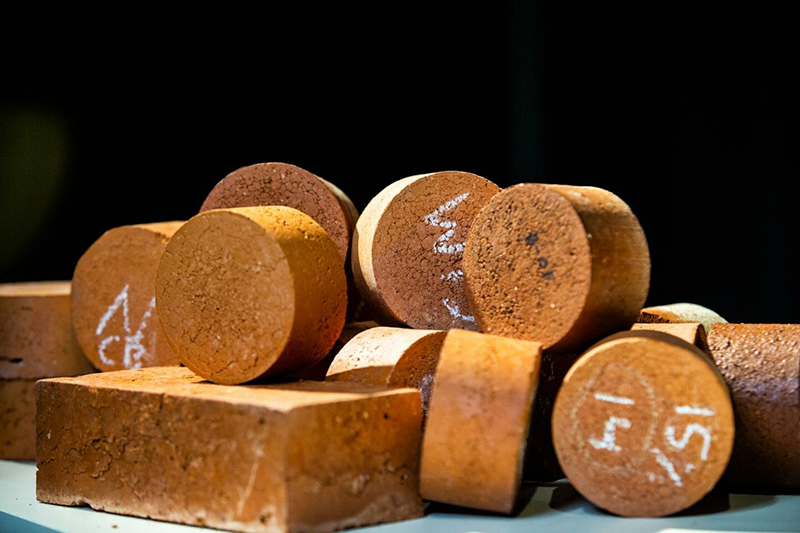
Fired-clay bricks incorporating biosolids. Credit: RMIT University

You might also like


Filed Under: Product design


LEARNING CENTER

Design World Learning Center
“dw
EXPAND YOUR KNOWLEDGE AND STAY CONNECTED
Get the latest info on technologies, tools and strategies for Design Engineering Professionals.
Motor University

Design World Digital Edition

cover

Browse the most current issue of Design World and back issues in an easy to use high quality format. Clip, share and download with the leading design engineering magazine today.

EDABoard the Forum for Electronics

Top global problem solving EE forum covering Microcontrollers, DSP, Networking, Analog and Digital Design, RF, Power Electronics, PCB Routing and much more

EDABoard: Forum for electronics

Sponsored Content

  • Digitalization made easy: Bridging IT/OT with scalable network infrastructure
  • Apple Rubber custom o-rings for harsh underwater conditions
  • ASMPT chooses Renishaw for high-quality motion control
  • Innovating Together: How Italian Machine Builders Drive Industry Forward Through Collaboration
  • Efficiency Is the New Luxury — and Italy Is Delivering
  • Beyond the Build: How Italy’s Machine Makers Are Powering Smart Manufacturing
View More >>
Engineering Exchange

The Engineering Exchange is a global educational networking community for engineers.

Connect, share, and learn today »

Design World
  • About us
  • Contact
  • Manage your Design World Subscription
  • Subscribe
  • Design World Digital Network
  • Control Engineering
  • Consulting-Specifying Engineer
  • Plant Engineering
  • Engineering White Papers
  • Leap Awards

Copyright © 2025 WTWH Media LLC. All Rights Reserved. The material on this site may not be reproduced, distributed, transmitted, cached or otherwise used, except with the prior written permission of WTWH Media
Privacy Policy | Advertising | About Us

Search Design World

  • Home
  • Technologies
    • ELECTRONICS • ELECTRICAL
    • Fastening • joining
    • FLUID POWER
    • LINEAR MOTION
    • MOTION CONTROL
    • SENSORS
    • TEST & MEASUREMENT
    • Factory automation
    • Warehouse automation
    • DIGITAL TRANSFORMATION
  • Learn
    • Tech Toolboxes
    • Learning center
    • eBooks • Tech Tips
    • Podcasts
    • Videos
    • Webinars • general engineering
    • Webinars • Automated warehousing
    • Voices
  • LEAP Awards
  • 2025 Leadership
    • 2024 Winners
    • 2023 Winners
    • 2022 Winners
    • 2021 Winners
  • Design Guides
  • Resources
    • 3D Cad Models
      • PARTsolutions
      • TraceParts
    • Digital Issues
      • Design World
      • EE World
    • Educational Assets
    • Engineering diversity
    • Reports
    • Trends
  • Supplier Listings
  • Advertise
  • SUBSCRIBE
    • MAGAZINE
    • NEWSLETTER
We use cookies to personalize content and ads, to provide social media features, and to analyze our traffic. We share information about your use of our site with our social media, advertising, and analytics partners who may combine it with other information you’ve provided to them or that they’ve collected from your use of their services. You consent to our cookies if you continue to use this website.