Design World

  • Home
  • Technologies
    • ELECTRONICS • ELECTRICAL
    • Fastening • joining
    • FLUID POWER
    • LINEAR MOTION
    • MOTION CONTROL
    • SENSORS
    • TEST & MEASUREMENT
    • Factory automation
    • Warehouse automation
    • DIGITAL TRANSFORMATION
  • Learn
    • Tech Toolboxes
    • Learning center
    • eBooks • Tech Tips
    • Podcasts
    • Videos
    • Webinars • general engineering
    • Webinars • Automated warehousing
    • Voices
  • LEAP Awards
  • 2026 Leadership
    • 2025 Winners
    • 2024 Winners
    • 2023 Winners
    • 2022 Winners
    • 2021 Winners
  • Design Guides
  • Resources
    • 3D Cad Models
      • PARTsolutions
      • TraceParts
    • Digital Issues
      • Design World
      • EE World
    • Educational Assets
    • Engineering diversity
    • On the Floor
    • Reports
    • Trends
  • Supplier Listings
  • Advertise
  • SUBSCRIBE
    • MAGAZINE
    • NEWSLETTER

What is a gearmotor? Technical Summary

By Lisa Eitel | May 7, 2015

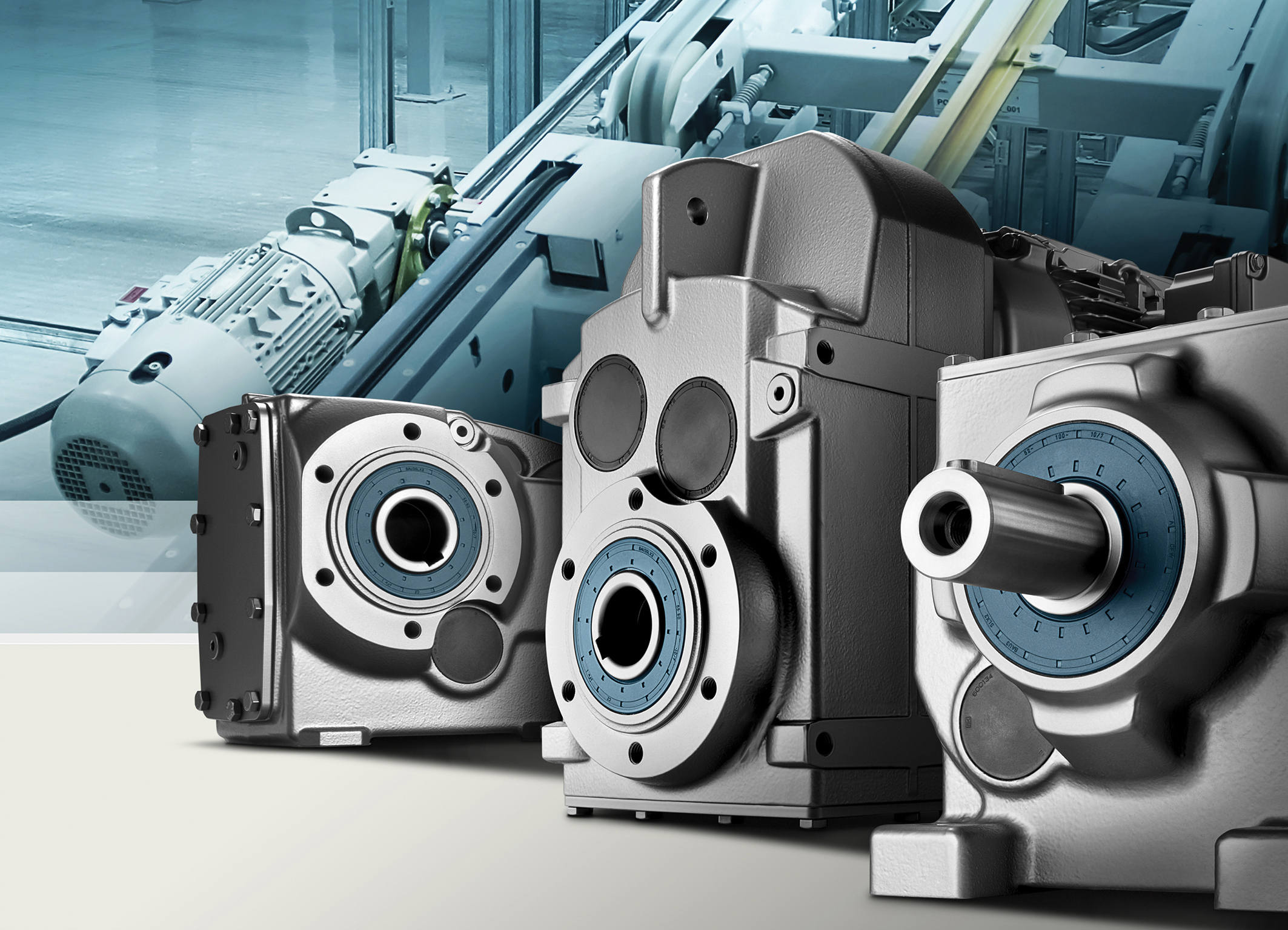
Gearmotors can be made with many different gear types. For instance, the Simogear gear motor series from Siemens features helical, parallel shaft and helical bevel gear unit types.

by Miles Budimir, Senior Editor for Design World—

Gearmotors are a fairly well-established technology. And recently, there is renewed interest in gearmotors, following a trend in integrated systems in general.

More specifically, rising energy costs are driving demand for improved process efficiencies. This presents an opening for gearmotors that can be used in a variety of applications and represents a tremendous opportunity for global energy savings.

Essentially, a gearmotor is a type of gear reducer based around an ac or dc electrical motor. The gear and the motors are combined into one unit.

A gearmotor delivers high torque at low horsepower or low speed. The speed specifications for these motors are normal speed and stall-speed torque. These motors use gears, typically assembled as a gearbox, to reduce speed, which makes more torque available. Gearmotors are most often used in applications that need a lot of force to move heavy objects.

By and large, most industrial gearmotors use ac motors, typically fixed-speed motors. However, dc motors can also be used as gearmotors … a lot of which are used in automotive applications.

Gearmotors have a number of advantages over other types of motor/gear combinations. Perhaps most importantly, gearmotors can simplify design and implementation by eliminating the step of separately designing and integrating the motors with the gears, thus reducing engineering costs.

Another benefit of gearmotors, if sized properly, is that having the right combination of motor and gearing can prolong gearmotor life and allow for optimum power management and use.

Also, because gearmotors are integrated units, they eliminate the need for couplings and also eliminate any potential alignment problems. Such problems are common when a separate motor and gear reducer are connected together and result in more engineering time and cost as well as the potential for misalignment causing bearing failure and ultimately reduced useful life.

Related article: How to Select a Gearmotor in Four Simple Steps

Advances in gearmotor technology include the use of new specialty materials, coatings and bearings, and also improved gear tooth designs that are optimized for noise reduction, increase in strength and improved life, all of which allows for improved performance in smaller packages.

Conceptually, motors and gearboxes can be mixed and matched as needed to best fit the application, but in the end, the complete gearmotor is the driving factor. There are a number of motors and gearbox types that can be combined; for example, a right angle wormgear, planetary and parallel shaft gearbox can be combined with permanent magnet dc, ac induction, or brushless dc motors.

Though there are a number of different motor and gearbox combinations available … not just any one will work for any application. Certain combinations are efficient and cost-effective than others. Knowing the application and having accurate ratings for the motor and gearbox is the foundation for successfully integrating a gearmotor into a system.

Related article: How to Size and Select a Gearbox: A Motion Engineer’s Guide

Related article: What are Power-Transmission Gears? Technical Summary

What-is-a-gearmotor-BASICS

Motion Control Tips

You might also like


Filed Under: Motion Control Tips


About The Author

Lisa Eitel

Lisa Eitel has worked in the automation industry since 2001. Her areas of focus include motors, drives, motion control, power transmission, linear motion, and sensing and feedback technologies. She has a B.S. in Mechanical Engineering and is an inductee of Tau Beta Pi engineering honor society; a member of the Society of Women Engineers; and a judge for the FIRST Robotics Buckeye Regionals. Besides her motioncontroltips.com contributions, she also leads the production of the quarterly motion issues of Design World.

LEARNING CENTER

Design World Learning Center
“dw
EXPAND YOUR KNOWLEDGE AND STAY CONNECTED
Get the latest info on technologies, tools and strategies for Design Engineering Professionals.
Motor University

Design World Digital Edition

cover

Browse the most current issue of Design World and back issues in an easy to use high quality format. Clip, share and download with the leading design engineering magazine today.

EDABoard the Forum for Electronics

Top global problem solving EE forum covering Microcontrollers, DSP, Networking, Analog and Digital Design, RF, Power Electronics, PCB Routing and much more

EDABoard: Forum for electronics

Sponsored Content

  • Hyundai and Boston Dynamics bet big on AI robot training for manufacturing
  • From Component Search to Component Confidence
  • Packaging Without Pneumatics: A Smarter Approach to Flexible Automation
  • How Apple Rubber’s Rapid Prototyping Kept Whale Research Afloat
  • Toyota goes all-in on humanoid robots
  • Mobile robotics moves to the textile industry
View More >>
Design World
  • About us
  • Contact
  • Manage your Design World Subscription
  • Subscribe
  • Design World Digital Network
  • Control Engineering
  • Consulting-Specifying Engineer
  • Plant Engineering
  • Engineering White Papers
  • Leap Awards

Copyright © 2026 Arrowfly LLC. All Rights Reserved. The material on this site may not be reproduced, distributed, transmitted, cached or otherwise used, except with the prior written permission of Arrowfly
Privacy Policy | Advertising | About Us

Search Design World

  • Home
  • Technologies
    • ELECTRONICS • ELECTRICAL
    • Fastening • joining
    • FLUID POWER
    • LINEAR MOTION
    • MOTION CONTROL
    • SENSORS
    • TEST & MEASUREMENT
    • Factory automation
    • Warehouse automation
    • DIGITAL TRANSFORMATION
  • Learn
    • Tech Toolboxes
    • Learning center
    • eBooks • Tech Tips
    • Podcasts
    • Videos
    • Webinars • general engineering
    • Webinars • Automated warehousing
    • Voices
  • LEAP Awards
  • 2026 Leadership
    • 2025 Winners
    • 2024 Winners
    • 2023 Winners
    • 2022 Winners
    • 2021 Winners
  • Design Guides
  • Resources
    • 3D Cad Models
      • PARTsolutions
      • TraceParts
    • Digital Issues
      • Design World
      • EE World
    • Educational Assets
    • Engineering diversity
    • On the Floor
    • Reports
    • Trends
  • Supplier Listings
  • Advertise
  • SUBSCRIBE
    • MAGAZINE
    • NEWSLETTER