Design World

  • Home
  • Technologies
    • ELECTRONICS • ELECTRICAL
    • Fastening • joining
    • FLUID POWER
    • LINEAR MOTION
    • MOTION CONTROL
    • SENSORS
    • TEST & MEASUREMENT
    • Factory automation
    • Warehouse automation
    • DIGITAL TRANSFORMATION
  • Learn
    • Tech Toolboxes
    • Learning center
    • eBooks • Tech Tips
    • Podcasts
    • Videos
    • Webinars • general engineering
    • Webinars • Automated warehousing
    • Voices
  • LEAP Awards
  • 2025 Leadership
    • 2024 Winners
    • 2023 Winners
    • 2022 Winners
    • 2021 Winners
  • Design Guides
  • Resources
    • 3D Cad Models
      • PARTsolutions
      • TraceParts
    • Digital Issues
      • Design World
      • EE World
    • Educational Assets
    • Engineering diversity
    • Reports
    • Trends
  • Supplier Listings
  • Advertise
  • SUBSCRIBE
    • MAGAZINE
    • NEWSLETTER

Automotive electric-actuator market trends

By Lisa Eitel | April 18, 2024

Automotive electric actuators adjust engine settings; manage safety features; and impart precise control fuel efficiency. Many such actuators are compact and light, fitting well in modern cars and requiring less maintenance. Some can be programmed to execute different tasks.

The market for these automotive actuators is likely to grow at a moderate pace and reach U.S. $38.3B by 2032 thanks in part to a few key drivers.

Growing vehicle production: The automotive actuators market is experiencing growth primarily due to the increased production of vehicles worldwide to satisfy rising demand for cars. That’s especially true in China and India, where growing incomes and urbanization are causing more people to purchase vehicles.

The rise of EVs: EVs and hybrid vehicles need especially sophisticated actuators for power and energy-management features to maximize control and efficiency. With the growing adoption of EVs, the need for actuators is expanding, fueling market growth in the automotive actuators segment. Case in point: During last year’s Battery Show in Michigan, Marelli presented a smart actuator for EV transmission and thermal-management systems. The actuators include a flexible and scalable mechanical design, an electronic control and networking module, and software to support easy integration.

Stringent emission regulations: Another growth driver is increasingly stringent emission regulations that are compelling internal-combustion car makers to adopt clean-engine technologies such as variable valve timing and exhaust-gas recirculation. These advanced engine systems need precise control with actuators to regulate exhaust flow and timing, reduce emissions, and maximize engine efficiency.
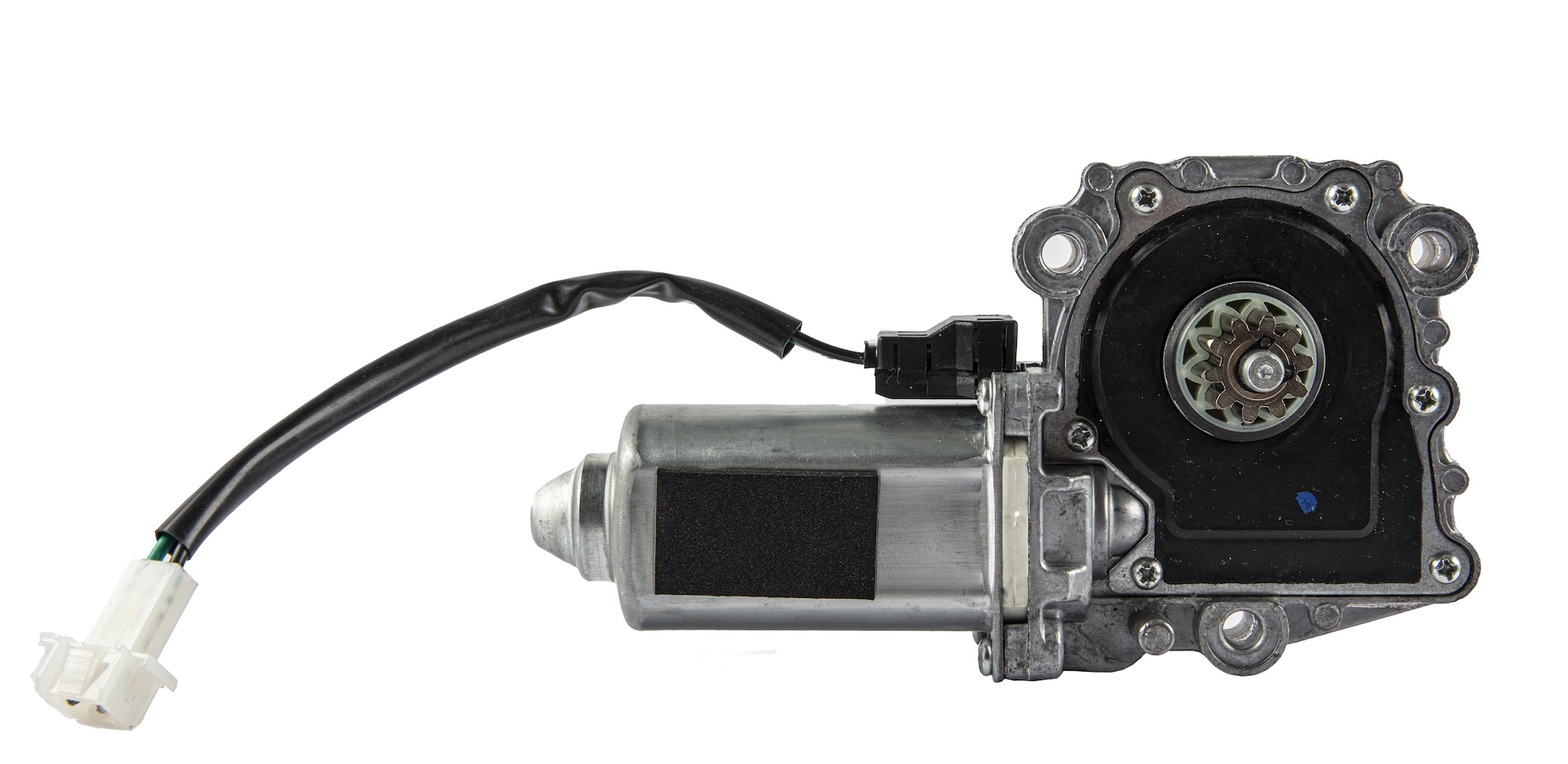
Shown here is an electric motor-driven window actuator. Image: Mehmet Cetin • Dreamstime

Advancement of safety functions: Advanced driver assistance systems (ADASs) include features such as adaptive cruise control, lane-keeping assist, and emergency braking. These ADAS features heavily rely on actuators for adjusting speed, steering, and braking in response to changing traffic conditions. As ADASs become increasingly common, there’s a growing demand for the advanced actuators to support their functions.

Rising prevalence of autonomous vehicles: Actuators are at the core of autonomous steering, braking, and throttle control — translating electronic signals into mechanical actions for safe navigation without human intervention. Their precise and reliable operation is essential for ensuring the safety of passengers and pedestrians alike. As self-driving technology advances and becomes more mainstream, the demand for advanced actuators capable of supporting autonomous driving functionalities will continue to grow. This increasing demand is expected to drive innovation in the automotive industry as manufacturers strive to develop actuators that meet the stringent requirements of autonomous vehicle systems.

Actuators in automotive applications must satisfy three key design objectives. Automotive actuators must satisfy demanding speed, precision, and reliability requirements while remaining cost-effective. Balancing performance with affordability involves careful design and manufacturing optimization. Automotive actuators must also fit into tight spaces and stay under weight limits without sacrificing performance. This requires using advanced materials and efficient design techniques to ensure the actuators meet the size and weight requirements of today’s vehicles. Finally, automotive actuators must withstand exposure to extreme temperatures — including cold and scorching heat that can effect performance and longevity. To this end, many actuators feature special materials and housings.

These insights are based on a recent Fact.MR report titled Automotive Actuators Market.  For more related to this topic, read: Automation for North American EV battery production.

You Might Also Like


Filed Under: Automotive, Trends


About The Author

Lisa Eitel

Lisa Eitel has worked in the automation industry since 2001. Her areas of focus include motors, drives, motion control, power transmission, linear motion, and sensing and feedback technologies. She has a B.S. in Mechanical Engineering and is an inductee of Tau Beta Pi engineering honor society; a member of the Society of Women Engineers; and a judge for the FIRST Robotics Buckeye Regionals. Besides her motioncontroltips.com contributions, she also leads the production of the quarterly motion issues of Design World.

LEARNING CENTER

Design World Learning Center
“dw
EXPAND YOUR KNOWLEDGE AND STAY CONNECTED
Get the latest info on technologies, tools and strategies for Design Engineering Professionals.
Motor University

Design World Digital Edition

cover

Browse the most current issue of Design World and back issues in an easy to use high quality format. Clip, share and download with the leading design engineering magazine today.

EDABoard the Forum for Electronics

Top global problem solving EE forum covering Microcontrollers, DSP, Networking, Analog and Digital Design, RF, Power Electronics, PCB Routing and much more

EDABoard: Forum for electronics

Sponsored Content

  • Digitalization made easy: Bridging IT/OT with scalable network infrastructure
  • Apple Rubber custom o-rings for harsh underwater conditions
  • ASMPT chooses Renishaw for high-quality motion control
  • Innovating Together: How Italian Machine Builders Drive Industry Forward Through Collaboration
  • Efficiency Is the New Luxury — and Italy Is Delivering
  • Beyond the Build: How Italy’s Machine Makers Are Powering Smart Manufacturing
View More >>
Engineering Exchange

The Engineering Exchange is a global educational networking community for engineers.

Connect, share, and learn today »

Design World
  • About us
  • Contact
  • Manage your Design World Subscription
  • Subscribe
  • Design World Digital Network
  • Control Engineering
  • Consulting-Specifying Engineer
  • Plant Engineering
  • Engineering White Papers
  • Leap Awards

Copyright © 2025 WTWH Media LLC. All Rights Reserved. The material on this site may not be reproduced, distributed, transmitted, cached or otherwise used, except with the prior written permission of WTWH Media
Privacy Policy | Advertising | About Us

Search Design World

  • Home
  • Technologies
    • ELECTRONICS • ELECTRICAL
    • Fastening • joining
    • FLUID POWER
    • LINEAR MOTION
    • MOTION CONTROL
    • SENSORS
    • TEST & MEASUREMENT
    • Factory automation
    • Warehouse automation
    • DIGITAL TRANSFORMATION
  • Learn
    • Tech Toolboxes
    • Learning center
    • eBooks • Tech Tips
    • Podcasts
    • Videos
    • Webinars • general engineering
    • Webinars • Automated warehousing
    • Voices
  • LEAP Awards
  • 2025 Leadership
    • 2024 Winners
    • 2023 Winners
    • 2022 Winners
    • 2021 Winners
  • Design Guides
  • Resources
    • 3D Cad Models
      • PARTsolutions
      • TraceParts
    • Digital Issues
      • Design World
      • EE World
    • Educational Assets
    • Engineering diversity
    • Reports
    • Trends
  • Supplier Listings
  • Advertise
  • SUBSCRIBE
    • MAGAZINE
    • NEWSLETTER
We use cookies to personalize content and ads, to provide social media features, and to analyze our traffic. We share information about your use of our site with our social media, advertising, and analytics partners who may combine it with other information you’ve provided to them or that they’ve collected from your use of their services. You consent to our cookies if you continue to use this website.